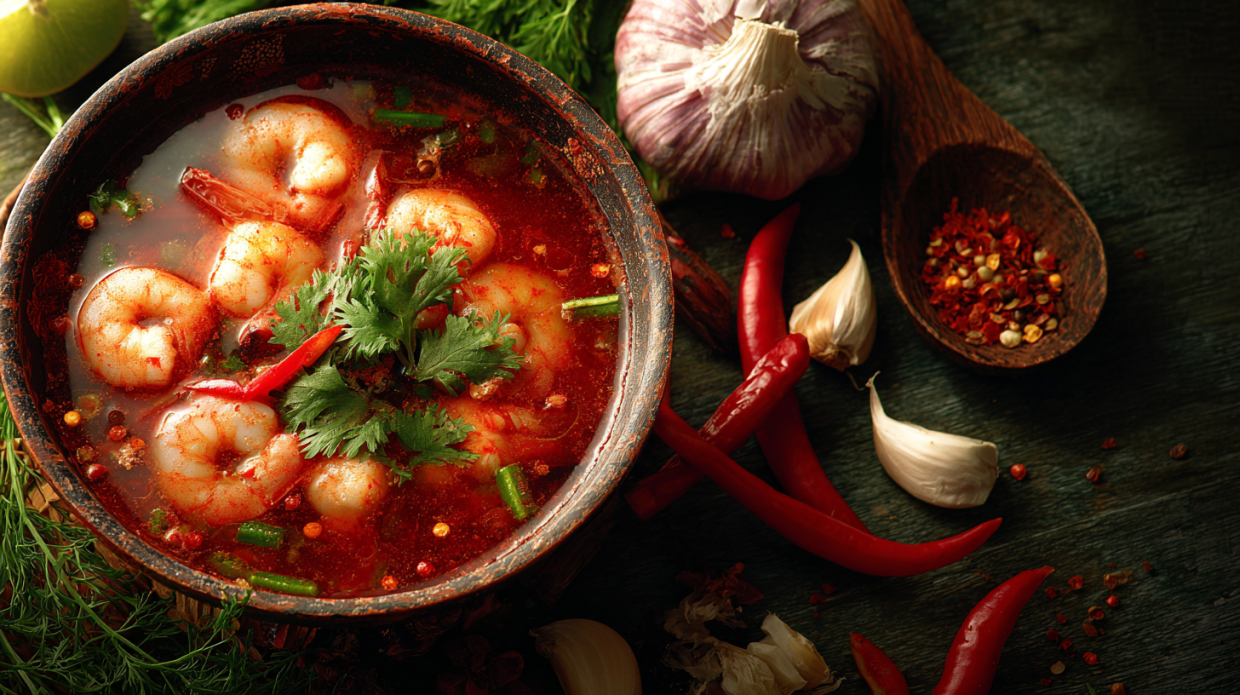

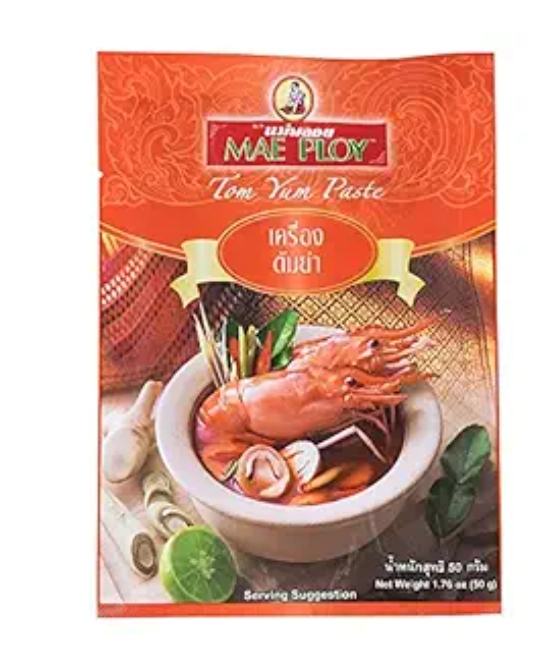
Mae Ploy, Tom Yum Paste, 50 g. [Pack of 3 pieces]
Discover how this beloved pantry staple transforms ordinary ingredients into extraordinary Thai cuisine
There’s something magical about the moment you first taste authentic Tom Yum soup. The complex dance of sour, spicy, and aromatic flavors awakens your senses like a symphony conducted by centuries of Thai culinary tradition. For home cooks worldwide who crave this legendary taste without the complexity of sourcing exotic ingredients, Mae Ploy Tom Yum Paste has become the secret weapon that bridges the gap between restaurant-quality Thai cuisine and weeknight dinner convenience.
Walking through the aisles of Asian grocery stores, you’ll often find shelves lined with various curry pastes and flavor bases, but none quite capture the essence of Thailand’s most beloved soup like Mae Ploy’s distinctive red and yellow packaging. This unassuming jar holds within it the concentrated soul of Thai cooking, waiting to transform your kitchen into a bustling Bangkok street food stall.
The Heart of Thai Cuisine: Understanding Tom Yum
Before diving into the specifics of Mae Ploy’s offering, it’s essential to understand what makes Tom Yum so special in Thai culture. Tom Yum isn’t just a soup; it’s a cultural institution that represents the perfect balance of Thailand’s fundamental flavors. The name itself tells the story: “Tom” refers to the boiling process, while “Yum” describes the characteristic sour and spicy salad-style mixing that creates the soup’s distinctive taste profile.
Traditional Tom Yum soup embodies the Thai philosophy of balancing contrasting elements. The sourness typically comes from lime juice and tamarind, the heat from chilies, the saltiness from fish sauce, and the aromatic foundation from lemongrass, galangal, and kaffir lime leaves. This intricate balance has made Tom Yum one of the most recognizable Thai dishes globally, often serving as many people’s introduction to authentic Thai flavors.
Mae Ploy Tom Yum Paste captures this complexity in a convenient form, allowing home cooks to achieve authentic flavors without spending hours tracking down specialty ingredients or mastering traditional preparation techniques. The paste represents years of culinary expertise condensed into a single jar, making it possible for anyone to create restaurant-quality Tom Yum soup in their own kitchen.
What is Mae Ploy Tom Yum Paste Used For?
The versatility of Mae Ploy Tom Yum Paste extends far beyond its namesake soup, though that remains its most celebrated application. This concentrated flavor base serves as a culinary chameleon, adapting to various cooking methods and dishes while maintaining its distinctive Thai character.
The primary use, naturally, involves creating Tom Yum soup in its various iterations. Whether you’re preparing the clear version (Tom Yum Goong Nam Sai) or the creamy coconut milk variation (Tom Yum Goong Nam Khon), this paste provides the essential flavor foundation that would otherwise require multiple fresh ingredients and considerable preparation time.
Beyond soup making, creative cooks have discovered that this paste works exceptionally well as a marinade for proteins. The acidic components help tenderize meat while infusing it with complex Thai flavors. Chicken thighs marinated in a mixture of Mae Ploy Tom Yum Paste, coconut milk, and a touch of brown sugar develop an incredible depth of flavor that translates beautifully to grilling or roasting.
The paste also excels in stir-fry applications, where its concentrated nature allows it to coat ingredients evenly while providing that characteristic Tom Yum taste. Many Thai restaurants actually use Tom Yum paste as a base for various dishes, not limiting themselves to soup preparations. When diluted appropriately, it can serve as a sauce for noodle dishes, a flavor enhancer for fried rice, or even a dipping sauce when mixed with additional lime juice and fish sauce.
For those interested in fusion cooking, Mae Ploy Tom Yum Paste has found its way into unexpected applications. Some innovative cooks incorporate it into salad dressings, creating Thai-inspired vinaigrettes that bring Southeast Asian flavors to Western-style salads. Others use it as a pizza sauce base, creating unique fusion pizzas topped with shrimp, mushrooms, and fresh herbs.
Crafting the Perfect Tom Yum Soup
Creating authentic Tom Yum soup with Mae Ploy Tom Yum Paste requires understanding the proper ratios and cooking techniques that bring out the paste’s full potential. The beauty of using this paste lies not just in its convenience, but in how it allows you to focus on the cooking process rather than ingredient preparation.
To begin, you’ll want to start with a good quality stock or broth. While water can work in a pinch, using chicken or seafood stock provides additional depth that complements the paste’s concentrated flavors. For a standard serving of four people, bring approximately six cups of stock to a gentle simmer in a medium saucepan.
The key to properly incorporating Mae Ploy Tom Yum Paste lies in the timing and method of addition. Rather than simply stirring the paste directly into the hot stock, which can result in uneven distribution and potential burning, create a slurry by mixing two to three tablespoons of the paste with a small amount of the hot stock in a separate bowl. This technique ensures smooth integration and prevents the paste from clumping.
Once you’ve created your slurry, gradually whisk it into the simmering stock, tasting as you go. The beauty of working with this paste is that you can adjust the intensity to your preference. Some prefer a more subtle Tom Yum flavor that allows other ingredients to shine, while others want the bold, assertive taste that makes your taste buds tingle with each spoonful.
After incorporating the paste, add your aromatics. Fresh lemongrass stalks, bruised and cut into two-inch pieces, contribute essential oils that complement the paste’s existing lemongrass components. Kaffir lime leaves, either fresh or frozen, provide that distinctive citrusy aroma that’s impossible to replicate with substitutes. Galangal or ginger slices add warmth and depth, while mushrooms – typically straw mushrooms or oyster mushrooms – provide earthy notes and satisfying texture.
The protein component comes next, with shrimp being the traditional choice for Tom Yum Goong. Add larger shrimp during the final minutes of cooking to prevent overcooking, while smaller shrimp can handle slightly longer cooking times. For those preferring chicken, thin slices cook quickly and absorb the soup’s flavors beautifully.
The final flavor adjustments involve balancing the soup’s fundamental taste elements. Fresh lime juice brightens the entire dish, while fish sauce adds essential saltiness and umami depth. Thai chilies or chili oil provide additional heat for those who desire more fire than the paste alone provides. The goal is achieving a harmonious balance where no single flavor dominates, but rather where all elements work together to create that distinctive Tom Yum experience.
Understanding the Spice Level
One of the most frequently asked questions about Mae Ploy Tom Yum Paste concerns its heat level, and the answer requires some nuanced understanding of Thai spice perception versus Western palates. The paste carries a moderate spice level that most people would classify as mild to medium heat, making it accessible to a broader audience while still maintaining authenticity.
Thai cuisine traditionally balances heat with other flavors, and this paste follows that philosophy. The spiciness doesn’t overwhelm but rather contributes to the overall flavor complexity. For those accustomed to mild flavors, the paste might initially seem quite spicy, but the heat dissipates quickly and doesn’t build intensely with continued consumption.
The spice level also varies depending on how you use the paste. When creating soup, the heat gets diluted across the entire pot of liquid, resulting in a gentler overall spiciness. However, when using the paste as a marinade or in stir-fries with less liquid dilution, the heat becomes more concentrated and noticeable.
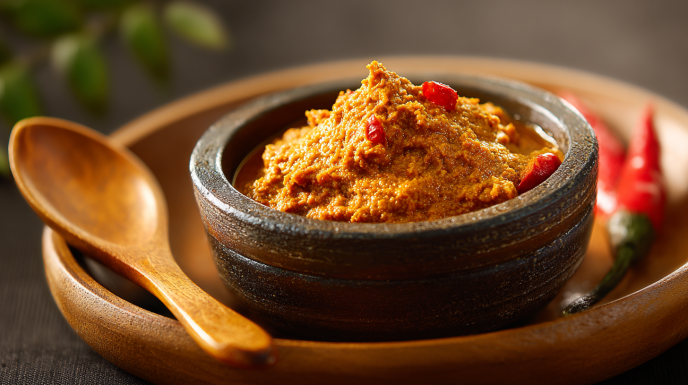
Mae Ploy Tom Yum Paste achieves its heat primarily through dried chilies, which provide a different type of spiciness compared to fresh chilies. This dried chili heat tends to be more mellow and rounded, lacking the sharp bite that fresh chilies can provide. This characteristic makes the paste more forgiving for those sensitive to spicy foods while still delivering the authentic flavor profile that Tom Yum requires.
For heat-sensitive individuals, several strategies can help manage the spiciness. Using less paste initially and gradually building up allows you to find your comfort level. Adding coconut milk creates the creamy Tom Yum variation while significantly mellowing the heat. Dairy products, while not traditional in Thai cooking, can also help neutralize spiciness if needed.
Conversely, spice enthusiasts might find the paste’s heat level insufficient for their preferences. Fortunately, it’s easy to enhance the spiciness by adding fresh Thai chilies, chili oil, or dried chili flakes during cooking. This flexibility makes Mae Ploy Tom Yum Paste suitable for households with varying heat tolerances.
Ingredient Composition and Authenticity
The ingredient list of Mae Ploy Tom Yum Paste reads like a who’s who of essential Thai aromatics, reflecting the brand’s commitment to maintaining authentic flavors while ensuring shelf stability and convenience. Understanding these ingredients helps appreciate both the paste’s complexity and its faithfulness to traditional Tom Yum preparations.
Lemongrass forms the aromatic foundation, providing that distinctive citrusy, almost floral fragrance that immediately signals Thai cuisine. The paste contains both lemongrass extract and dried lemongrass pieces, ensuring multiple layers of this essential flavor. Galangal, often confused with ginger by Western cooks, contributes a sharper, more pine-like heat that’s irreplaceable in authentic Thai cooking.
Kaffir lime leaves provide another irreplaceable component, contributing oils that create Tom Yum’s characteristic citrusy aroma. These leaves, impossible to substitute effectively, demonstrate the paste’s commitment to authenticity rather than approximation. Tamarind paste adds the essential sourness that balances Tom Yum’s heat, while various chili varieties contribute both heat and depth.
Fish sauce, a cornerstone of Thai cuisine, provides the umami foundation that gives Tom Yum its savory depth. The inclusion of fish sauce also answers questions about the paste’s suitability for various dietary restrictions. Shallots and garlic contribute aromatic complexity, while palm sugar balances the overall flavor profile with subtle sweetness.
Mae Ploy Tom Yum Paste also contains various preservatives and stabilizers necessary for shelf stability, though these don’t detract from the authentic flavor profile. The brand has worked to minimize artificial additives while ensuring the paste maintains its quality during storage and transport.
Regarding authenticity, Mae Ploy represents a Thai brand with decades of experience in creating traditional curry pastes and flavor bases. The company’s roots in Thai cuisine lend credibility to their formulations, and many Thai restaurants worldwide actually use Mae Ploy products in their kitchens. This professional endorsement speaks to the paste’s authenticity and quality.
The paste’s formulation reflects compromises necessary for commercial production while maintaining flavor integrity. Traditional Tom Yum paste, made fresh daily in Thai kitchens, might have slightly different proportions or include ingredients that don’t preserve well. However, Mae Ploy Tom Yum Paste captures the essential character that makes Tom Yum recognizable and beloved.
Dietary Considerations and Allergens
Understanding the dietary implications of Mae Ploy Tom Yum Paste requires careful examination of its ingredients and production methods, as this affects its suitability for various dietary restrictions and preferences.
The most significant dietary consideration involves the paste’s fish sauce content, which immediately excludes it from vegan and vegetarian diets. Fish sauce, while essential for authentic Tom Yum flavor, is derived from fermented anchovies, making the paste unsuitable for those avoiding animal products. This ingredient also means the paste contains fish allergens, requiring caution for individuals with seafood allergies.
For vegetarians who consume dairy but avoid meat and fish, Mae Ploy Tom Yum Paste unfortunately doesn’t meet dietary requirements due to the fish sauce inclusion. However, some vegetarians who occasionally include fish sauce in their diets might find this paste acceptable, though this varies based on individual dietary interpretations.
The paste’s gluten content requires careful consideration. While the primary ingredients don’t naturally contain gluten, some formulations might include wheat-derived ingredients or be produced in facilities that process gluten-containing products. Those with celiac disease or severe gluten sensitivity should carefully read labels and potentially contact the manufacturer for detailed allergen information.
Regarding other common allergens, the paste typically doesn’t contain nuts, dairy, or eggs in its standard formulation. However, cross-contamination during manufacturing could potentially introduce these allergens, making label reading essential for individuals with severe allergies.
The spice level, while moderate, might be problematic for individuals with certain digestive conditions. Those with acid reflux, gastritis, or other inflammatory digestive conditions might find the combination of chilies and acidic ingredients irritating. Starting with smaller amounts allows individuals to assess their tolerance.
For those following low-sodium diets, Mae Ploy Tom Yum Paste contains significant sodium levels, primarily from fish sauce and other preservative components. While this sodium contributes essential flavor, individuals monitoring sodium intake should account for the paste’s contribution to their daily totals.
The paste’s sugar content, while not excessive, comes primarily from palm sugar included for flavor balance. Diabetics or those following low-carbohydrate diets should factor this into their meal planning, though the amounts used in typical recipes contribute relatively small amounts of total carbohydrates.
Availability and Purchasing Options
Finding Mae Ploy Tom Yum Paste has become increasingly easier as Thai cuisine’s popularity has grown worldwide, though availability varies significantly based on geographic location and local market demographics. Understanding where to look and what to expect helps ensure you find authentic products rather than inferior substitutes.
Asian grocery stores represent the most reliable source for Mae Ploy products, often carrying multiple varieties and sizes. These specialized retailers typically have relationships with Asian food distributors, ensuring fresher stock and competitive pricing. The staff at these stores often have personal familiarity with the products and can provide usage recommendations or suggest complementary ingredients.
Large chain supermarkets have increasingly added international aisles that sometimes include Mae Ploy products, though selection might be limited compared to specialty stores. These mainstream retailers often stock the most popular items, which typically includes Mae Ploy Tom Yum Paste given its broad appeal.
Online purchasing has revolutionized access to specialty ingredients, with multiple platforms offering Mae Ploy products with varying shipping options and pricing. Online shopping proves particularly valuable for those in areas with limited Asian grocery options, though shipping costs and delivery times require consideration when planning meals.
When purchasing, examine packaging dates and storage conditions, especially for paste products that can degrade if stored improperly. Authentic Mae Ploy products feature specific packaging characteristics, including particular fonts, colors, and label layouts that help identify genuine products versus imitations.
Price variations between retailers can be significant, making comparison shopping worthwhile for regular users. Asian markets often offer the best prices, particularly when purchasing multiple items or during sales periods. Online retailers might offer bulk purchasing options that reduce per-unit costs for frequent users.
Mae Ploy Tom Yum Paste typically comes in standard jar sizes, though some retailers might offer restaurant-size containers for serious enthusiasts or small restaurants. The standard consumer size provides enough paste for multiple soup preparations, making it cost-effective for home use.
Storage and Shelf Life Management
Proper storage of Mae Ploy Tom Yum Paste significantly impacts both its longevity and flavor quality, making understanding best practices essential for maximizing your investment in this premium ingredient. The paste’s composition, while designed for stability, still requires attention to storage conditions for optimal results.
Unopened jars of Mae Ploy Tom Yum Paste remain stable at room temperature for extended periods, typically lasting well beyond their printed expiration dates when stored properly. The paste’s high salt and acid content, combined with minimal moisture, creates an environment that naturally inhibits bacterial growth and spoilage.
However, storage location within your pantry matters significantly. Avoid areas subject to temperature fluctuations, such as near stoves, heating vents, or windows that receive direct sunlight. Consistent, moderate temperatures preserve the paste’s flavor compounds and prevent separation or texture changes that can occur with temperature cycling.
Once opened, Mae Ploy Tom Yum Paste requires refrigeration to maintain quality and safety. The refrigerated paste typically remains good for several months, though flavor intensity might gradually diminish over time. Always use clean utensils when removing paste from the jar to prevent introducing contaminants that could accelerate spoilage.
Signs of spoilage include visible mold growth, off odors that differ from the paste’s characteristic spicy-sour aroma, or significant texture changes such as excessive separation or unusual consistency. When in doubt, discard the paste rather than risk foodborne illness.
For extended storage, Mae Ploy Tom Yum Paste can be frozen, though this requires some technique to maintain usability. Divide the paste into smaller portions using ice cube trays or small containers, freezing individual serving sizes that can be thawed as needed. This method prevents repeatedly thawing and refreezing the entire jar, which can degrade quality.
Frozen paste portions should be used within six months for best quality, though they remain safe for longer periods. Thaw frozen paste portions in the refrigerator rather than at room temperature to maintain food safety standards.
Some users find that the paste’s consistency changes slightly after freezing, becoming somewhat thicker or slightly separated. This doesn’t affect flavor or safety but might require additional mixing when incorporating into recipes.
Flavor Profile Deep Dive
The complex flavor profile of Mae Ploy Tom Yum Paste represents a masterful balance of Thailand’s fundamental taste elements, creating a concentrated essence that captures the soul of one of the world’s great soup traditions. Understanding these flavor components helps home cooks use the paste more effectively and appreciate its sophisticated formulation.
The initial aroma when opening a jar immediately transports you to a Thai kitchen, with lemongrass providing the dominant citrusy, almost floral top notes. This aromatic component is crucial because smell significantly influences taste perception, preparing your palate for the complex flavors that follow.
Sourness forms one of the paste’s fundamental pillars, derived primarily from tamarind and lime components. This acidity provides brightness that cuts through rich ingredients and stimulates appetite, while also contributing to the paste’s preservation qualities. The sourness in Mae Ploy Tom Yum Paste is well-balanced, avoiding the harsh bite that can occur with inferior products.
The heat component develops gradually rather than hitting immediately, reflecting the Thai approach to spiciness as a background element rather than an overwhelming force. Multiple chili varieties contribute different types of heat, from the sharp bite of fresh chilies to the deeper, more complex heat of dried varieties. This layered approach creates a more sophisticated spice experience than simple capsaicin burn.
Umami depth comes primarily from fish sauce, providing the savory foundation that makes Tom Yum satisfying rather than simply spicy and sour. This fish sauce component also contributes essential saltiness, though the overall sodium level remains balanced with other flavors rather than dominating the profile.
Aromatic complexity extends beyond lemongrass to include galangal’s sharp, pine-like notes and kaffir lime leaves’ distinctive citrus oils. These aromatics create the characteristic Thai fragrance that distinguishes authentic Tom Yum from imitations or fusion interpretations.
Subtle sweetness from palm sugar rounds out the flavor profile, preventing the acidity and heat from becoming overwhelming while adding depth that makes the paste more versatile in various applications. This sweetness is understated, supporting other flavors rather than announcing its presence.
The Mae Ploy Tom Yum Paste achieves remarkable complexity in a shelf-stable form, capturing flavors that traditionally required fresh ingredients and immediate consumption. This technological achievement allows home cooks worldwide to experience authentic Thai flavors regardless of ingredient availability.
Comparing Homemade Versus Commercial Paste
The debate between homemade and commercial Tom Yum paste reflects broader discussions about authenticity, convenience, and flavor quality in modern cooking. Mae Ploy Tom Yum Paste offers an interesting case study in how commercial products can successfully bridge the gap between traditional preparation and contemporary convenience.
Homemade Tom Yum paste, prepared fresh from individual ingredients, certainly offers advantages in terms of customization and ingredient control. Traditional preparation allows cooks to adjust each component’s proportion according to personal preference or seasonal ingredient availability. The fresh preparation also means maximum potency from volatile aromatic compounds that can diminish during commercial processing and storage.
However, creating authentic Tom Yum paste from scratch requires sourcing multiple specialty ingredients that might be difficult or expensive to obtain in many locations. Fresh galangal, kaffir lime leaves, and appropriate chili varieties often prove challenging to find, potentially forcing compromises that affect authenticity.
The time investment for homemade preparation is considerable, involving cleaning, chopping, and grinding multiple ingredients. Traditional methods using mortar and pestle require significant physical effort and time, while food processors might not achieve the ideal texture that releases optimal flavors.
Mae Ploy Tom Yum Paste excels in consistency and convenience, providing reliable results regardless of cooking skill level or ingredient sourcing limitations. The commercial preparation ensures balanced flavors that might take home cooks multiple attempts to achieve when starting from individual components.
The shelf stability of commercial paste means you can create Tom Yum soup spontaneously without advance planning or fresh ingredient shopping. This convenience factor has made Tom Yum accessible to busy households that might otherwise never experience authentic Thai flavors.
Quality comparison reveals that Mae Ploy Tom Yum Paste holds up remarkably well against homemade versions, particularly when compared to homemade pastes made with substitute ingredients due to sourcing limitations. The commercial paste often produces more authentic flavors than homemade versions using ginger instead of galangal or regular lime leaves instead of kaffir lime.
Professional Thai restaurants often use commercial pastes like Mae Ploy’s as base ingredients, modifying them with fresh additions to create their signature versions. This professional endorsement suggests that quality commercial pastes can serve as legitimate foundations for authentic Thai cooking.
The best approach might involve using Mae Ploy Tom Yum Paste as a foundation while adding fresh ingredients like herbs, lime juice, or additional chilies to customize the final flavor. This hybrid method combines commercial convenience with fresh ingredient benefits, often producing superior results compared to either approach alone.
Versatile Applications Beyond Soup
While Mae Ploy Tom Yum Paste earned its reputation through soup applications, creative cooks have discovered numerous ways to incorporate its complex flavors into diverse dishes, expanding its utility far beyond its original intended use. These alternative applications demonstrate the paste’s versatility and value as a pantry staple.
Stir-frying represents one of the most successful alternative applications, where the paste’s concentrated nature allows it to coat ingredients evenly while providing intense flavor. The key to successful stir-fry use involves diluting the paste slightly with stock or water to prevent burning while maintaining flavor intensity. Mae Ploy Tom Yum Paste works particularly well with seafood stir-fries, where its traditional shrimp compatibility translates perfectly to quick-cooking applications.
Marinade applications showcase another dimension of the paste’s versatility. The acidic components help tenderize proteins while the complex aromatics penetrate deeply during marinating time. Chicken thighs marinated in a mixture of Mae Ploy Tom Yum Paste, coconut milk, and palm sugar develop incredible flavor depth that translates beautifully to grilling or roasting.
Noodle dishes benefit tremendously from the paste’s ability to create complex sauce bases quickly. Pad Thai variations using Tom Yum paste instead of traditional tamarind-based sauces create fusion dishes that maintain Thai authenticity while offering new flavor experiences. The paste works equally well with rice noodles, egg noodles, or even wheat-based pasta for fusion applications.
Fried rice takes on new dimensions when Mae Ploy Tom Yum Paste replaces traditional seasonings. The paste’s umami depth and aromatic complexity transform simple fried rice into restaurant-quality dishes. This application works particularly well with seafood fried rice, where the paste’s traditional shrimp associations create harmonious flavor combinations.
Salad dressing applications might seem unconventional, but Mae Ploy Tom Yum Paste creates exceptional vinaigrettes when properly diluted with lime juice, rice vinegar, and oil. These Thai-inspired dressings work beautifully with green salads containing tropical fruits, nuts, and herbs, creating fusion dishes that bridge Thai and Western culinary traditions.
Pizza sauce represents perhaps the most creative application, where Mae Ploy Tom Yum Paste diluted with tomato sauce creates unique fusion pizzas. Topped with shrimp, mushrooms, and fresh herbs, these pizzas offer authentic Thai flavors in familiar formats that appeal to adventurous eaters.
Grilling applications extend beyond marinades to include basting sauces and finishing glazes. The paste mixed with honey or palm sugar creates caramelized coatings on grilled proteins that develop beautiful color while maintaining moisture and adding flavor complexity.
Protein Pairings and Combinations
The protein compatibility of Mae Ploy Tom Yum Paste extends far beyond traditional shrimp applications, though seafood remains the most natural and successful pairing. Understanding how different proteins interact with the paste’s complex flavors helps maximize its potential in various dishes.
Shrimp represents the classic pairing, where the sweet, delicate shellfish flavor complements rather than competes with the paste’s aromatic intensity. The traditional Tom Yum Goong showcases this pairing perfectly, but the combination works equally well in stir-fries, curries, and noodle dishes. Fresh shrimp absorbs the paste’s flavors quickly, making it ideal for quick-cooking applications.
Other seafood options expand the possibilities considerably. Firm white fish like cod or halibut hold up well to the paste’s assertive flavors while maintaining their own character. Squid and scallops offer different textures that complement the paste’s complexity, while mussels and clams contribute their own briny notes that enhance the overall maritime flavor profile.
Chicken provides excellent versatility, with different cuts offering various advantages. Dark meat chicken thighs remain moist during cooking while absorbing flavors deeply, making them ideal for longer-cooking applications like braises or slow-cooked dishes. Chicken breast requires more careful cooking to prevent drying but offers mild flavor that showcases the paste beautifully.
Pork, while less traditional, works surprisingly well with Mae Ploy Tom Yum Paste, particularly in stir-fry applications. The meat’s natural richness balances the paste’s acidity, while its ability to develop good browning creates textural contrast in finished dishes. Pork belly or shoulder cuts work particularly well due to their fat content and flavor intensity.
Beef applications require careful consideration of cut selection and cooking methods. Lean cuts like sirloin or tenderloin can become overwhelmed by the paste’s intensity, while richer cuts like short ribs or chuck develop complex flavor combinations during slow cooking. Thai beef salad applications using the paste as a dressing component work exceptionally well.
Tofu and other plant-based proteins offer opportunities for vegetarian applications, though the paste’s fish sauce content limits true vegan use. Firm tofu absorbs the paste’s flavors readily, while tempeh’s nutty character creates interesting flavor contrasts. These applications often work best when the paste is diluted and used as a marinade or cooking sauce.
Duck represents a premium application where the bird’s rich, slightly gamey flavor stands up beautifully to the paste’s complexity. The natural fat content helps balance the acidity while the dark meat provides richness that complements the paste’s aromatic elements.
Understanding cooking methods proves crucial for successful protein pairings. Quick-cooking methods like stir-frying or grilling work best with tender proteins that don’t require flavor penetration time. Longer cooking methods like braising or slow cooking allow tougher proteins to break down while absorbing complex flavors deeply.
Vegetable Combinations and Soup Enhancements
The vegetable combinations that work best with Mae Ploy Tom Yum Paste reflect both traditional Thai ingredients and creative adaptations that maintain flavor harmony while expanding possibilities for home cooks with varying ingredient access. Understanding these combinations helps create well-balanced dishes that showcase the paste’s complexity.
Mushrooms represent perhaps the most essential vegetable component in Tom Yum applications, providing earthy depth that balances the paste’s bright acidity and heat. Traditional straw mushrooms offer authentic flavor and texture, but oyster mushrooms, shiitake, or even common button mushrooms work well when straw mushrooms aren’t available. The mushrooms’ umami contribution enhances the paste’s savory elements while their texture provides satisfying substance.
Thai eggplant, with its slightly bitter edge and creamy texture, creates excellent contrast with the paste’s sharp flavors. The small, round Thai eggplants work best, but Japanese or Chinese eggplant varieties provide acceptable substitutes. The eggplant’s ability to absorb flavors makes it particularly valuable in soup applications where it becomes infused with the paste’s complexity.
Tomatoes might seem unconventional in Thai cooking, but they work beautifully with Mae Ploy Tom Yum Paste, particularly cherry tomatoes that add bursts of sweetness and acidity. The tomatoes’ natural umami content enhances the paste’s savory elements while their bright flavor complements the citrusy notes.
Bamboo shoots provide textural interest and mild flavor that doesn’t compete with the paste’s intensity. Their crunchy texture remains intact during cooking, providing contrast to softer soup elements. Canned bamboo shoots work perfectly well and offer convenience without significant flavor compromise.
Bell peppers, while not traditional, add color and sweetness that balances the paste’s heat and acidity. Red bell peppers work particularly well, offering natural sweetness that complements rather than conflicts with the paste’s complexity. Their crisp texture also provides pleasant contrast in finished dishes.
Leafy greens like bok choy, Chinese broccoli, or even spinach work well in Tom Yum applications, wilting quickly and absorbing flavors while maintaining some textural integrity. These greens add nutritional value while providing color contrast and fresh notes that brighten the overall dish.
Baby corn offers another textural element that works particularly well in soup applications. Its mild sweetness and satisfying crunch complement the paste’s complexity without overwhelming delicate flavors. Canned baby corn provides convenience while maintaining appropriate texture.
Green beans, whether traditional long beans or common green beans, provide color and crunch while their mild flavor allows the paste’s complexity to shine. They cook quickly and maintain good texture in soup applications.
Onions and shallots, while often included in the paste itself, benefit from fresh additions that provide textural contrast and additional aromatic elements. Red onions work particularly well, offering mild bite that complements rather than competes with the paste’s intensity.
Water chestnuts contribute unique crunchiness that remains intact during cooking, providing textural interest that enhances the overall eating experience. Their mild flavor doesn’t interfere with the paste’s complexity while their satisfying crunch adds dimension to finished dishes.
Understanding cooking timing proves crucial when combining vegetables with Mae Ploy Tom Yum Paste. Harder vegetables like bamboo shoots and water chestnuts can be added early in cooking, while delicate greens should be added just before serving to prevent overcooking and maintain color.
Cooking Techniques and Professional Tips
Mastering the use of Mae Ploy Tom Yum Paste requires understanding specific techniques that maximize its potential while avoiding common pitfalls that can result in disappointing results. Professional Thai cooks employ several methods that home cooks can adapt to achieve restaurant-quality outcomes.
Temperature control represents one of the most critical factors in working with this paste. The concentrated nature means it can burn easily if exposed to high heat without sufficient liquid dilution. Always start with medium or medium-low heat when incorporating the paste into dishes, particularly in stir-fry applications where the temptation might be to use high heat.
The blooming technique, borrowed from Indian curry preparation, works exceptionally well with Mae Ploy Tom Yum Paste. Heat a small amount of oil in your cooking vessel, then add a spoonful of paste and stir constantly for thirty to sixty seconds until the paste becomes fragrant and slightly darkened. This technique intensifies flavors and creates a better foundation for building dishes.
Layering flavors proves essential for complex results. Rather than adding all the paste at once, consider building flavors gradually. Start with a base amount, then add more to taste as the dish develops. This approach prevents overwhelming other ingredients while allowing you to achieve perfect balance.
Water quality affects final results more than many home cooks realize. The paste’s concentrated nature means it amplifies both good and bad flavors in your cooking liquid. Use filtered water when possible, and avoid water with strong mineral tastes that might conflict with the paste’s delicate balance.
Timing additions correctly maximizes the paste’s impact while preventing degradation of delicate flavor compounds. Add the paste early enough for flavors to meld and develop, but not so early that volatile aromatic compounds cook off completely. In soup applications, add the paste after establishing your liquid base but before adding delicate ingredients like seafood or greens.
Acid balance requires attention throughout cooking. The paste contains acidic elements, but adding fresh lime juice at the end brightens flavors and provides the characteristic Tom Yum tang. Taste frequently and adjust acid levels to maintain the bright, clean finish that makes Tom Yum distinctive.
Dilution ratios matter significantly depending on application. For soup bases, Mae Ploy Tom Yum Paste typically works best at ratios of two to three tablespoons per six cups of liquid, though personal preference and other ingredients affect optimal amounts. For marinades, use higher concentrations, while stir-fry applications might require dilution with stock or wine to prevent burning.
Emulsification techniques help when creating sauces or dressings with the paste. Whisk vigorously while slowly adding liquid components, or use a blender for smooth, stable emulsions. The paste’s natural oils help create stable mixtures when properly incorporated.
Storage of prepared dishes requires consideration of how the paste’s flavors develop over time. Many Tom Yum-based dishes actually improve after resting, as flavors meld and intensify. However, avoid storing dishes with fresh herbs or delicate vegetables that might deteriorate.
Professional kitchens often prepare Tom Yum base sauces in advance, storing them refrigerated for quick service. Home cooks can adopt this technique by preparing larger batches of paste-based sauces that can be quickly deployed for weeknight meals.
Understanding the paste’s interaction with different cooking vessels helps optimize results. Stainless steel or enamel-coated pots work best for soup applications, while carbon steel or cast iron works well for stir-frying. Avoid reactive metals like aluminum that might affect flavor development.
Cultural Significance and Culinary Heritage
Mae Ploy Tom Yum Paste represents more than just a convenient cooking ingredient; it embodies the preservation and dissemination of Thai culinary heritage in an increasingly globalized food landscape. Understanding this cultural context enriches appreciation for both the paste itself and the broader traditions it represents.
Tom Yum soup holds special significance in Thai culture, often considered the dish that best represents the country’s approach to balancing flavors. The soup appears in countless variations across Thailand’s regions, each reflecting local ingredients and preferences while maintaining the fundamental flavor principles that make Tom Yum universally recognizable.
The Mae Ploy brand itself represents Thai entrepreneurship and the country’s success in exporting its culinary culture worldwide. Founded decades ago, the company has grown from local production to international distribution, helping introduce Thai flavors to kitchens across the globe. This expansion reflects Thailand’s broader success in cultural export, with Thai restaurants now found in virtually every major city worldwide.
The paste’s commercial success demonstrates how traditional foods can adapt to modern lifestyles without losing essential character. Prior generations of Thai cooks spent considerable time preparing fresh curry pastes and flavor bases daily, a practice that modern lifestyles often don’t accommodate. Mae Ploy Tom Yum Paste preserves these traditional flavors while adapting to contemporary cooking realities.
Cultural authenticity in commercial products remains a ongoing discussion in international cuisine. Mae Ploy’s Thai origins and widespread use in Thai restaurants lend credibility to their formulations, suggesting that commercial convenience doesn’t necessarily compromise authenticity when done thoughtfully.
The paste’s global availability has contributed to increased appreciation for Thai cuisine’s complexity and sophistication. Many Western cooks first experience authentic Thai flavors through products like Mae Ploy Tom Yum Paste, developing palates that seek out more traditional Thai ingredients and cooking methods over time.
Regional variations in Tom Yum preparation across Thailand highlight the cuisine’s diversity while demonstrating how fundamental principles remain consistent. Northern Thai versions might emphasize different aromatics, while southern preparations often include more seafood elements. The paste captures essential elements that translate across these regional differences.
The role of convenience products in preserving culinary traditions presents interesting paradoxes. While purists might argue that commercial pastes diminish traditional cooking skills, they also make traditional flavors accessible to people who might otherwise never experience them. This accessibility can spark interest in deeper culinary exploration.
Mae Ploy Tom Yum Paste serves as a cultural bridge, allowing home cooks worldwide to create dishes that connect them to Thai culinary traditions even when they lack access to fresh ingredients or traditional preparation knowledge. This connection helps maintain cultural appreciation across geographic and linguistic boundaries.
The paste’s success also reflects growing international appreciation for complex, balanced flavors that Thai cuisine exemplifies. As global palates become more sophisticated, products that deliver authentic complexity rather than simplified approximations find increasing acceptance and demand.
Conclusion: Embracing Authentic Thai Flavors
Mae Ploy Tom Yum Paste represents far more than a simple cooking shortcut; it serves as a gateway to understanding and appreciating the sophisticated balance that defines Thai cuisine. Through its careful formulation of traditional ingredients and authentic flavor profiles, this paste enables home cooks worldwide to experience the complex interplay of sour, spicy, aromatic, and savory elements that make Tom Yum one of the world’s most beloved soups.
The versatility demonstrated throughout this exploration reveals how a single, well-crafted ingredient can transform ordinary cooking into extraordinary culinary experiences. Whether creating traditional Tom Yum soup, experimenting with fusion applications, or exploring creative uses in marinades and stir-fries, the paste provides a reliable foundation for culinary creativity while maintaining authentic Thai character.
Understanding the paste’s ingredients, proper usage techniques, and cultural significance enriches both the cooking process and the eating experience. When you understand that each spoonful contains the essence of lemongrass stalks swaying in Thai fields, the sharp brightness of kaffir lime leaves, and the careful balance achieved through generations of culinary refinement, even a simple weeknight soup becomes a connection to a rich cultural tradition.
The practical considerations covered – from storage and shelf life to dietary restrictions and purchasing options – ensure that home cooks can successfully incorporate Mae Ploy Tom Yum Paste into their regular cooking routines. This accessibility democratizes authentic Thai flavors, making them available regardless of geographic location or specialty ingredient access.
Perhaps most importantly, this paste demonstrates how modern food production can honor traditional flavors while adapting to contemporary lifestyles. The convenience doesn’t come at the expense of authenticity; instead, it preserves and shares traditional knowledge in forms that fit modern kitchen realities.
As global cuisine continues evolving and home cooks become increasingly adventurous, products like Mae Ploy Tom Yum Paste serve as valuable tools for expanding culinary horizons. They provide safe entry points into unfamiliar flavor territories while maintaining enough authenticity to develop genuine appreciation for the cuisines they represent.
The next time you open a jar of this remarkable paste, take a moment to appreciate the complexity contained within those few tablespoons. Behind that convenient packaging lies centuries of culinary evolution, careful ingredient selection, and commitment to preserving flavors that define one of the world’s great cuisine traditions. With Mae Ploy Tom Yum Paste in your pantry, authentic Thai flavors are always just minutes away, ready to transform your kitchen into a window onto the vibrant, complex, and endlessly satisfying world of Thai cooking.